
A Niger Delta group, the South South Initiative, has strongly defended the Federal Government’s community-based pipeline surveillance contracts, highlighting the role of Tantita Security Services and other indigenous firms in reducing oil theft and vandalism across the region.
The group warned that recent criticisms of the surveillance arrangement are being driven by misinformation and vested interests determined to undermine the gains recorded in protecting Nigeria’s oil infrastructure.
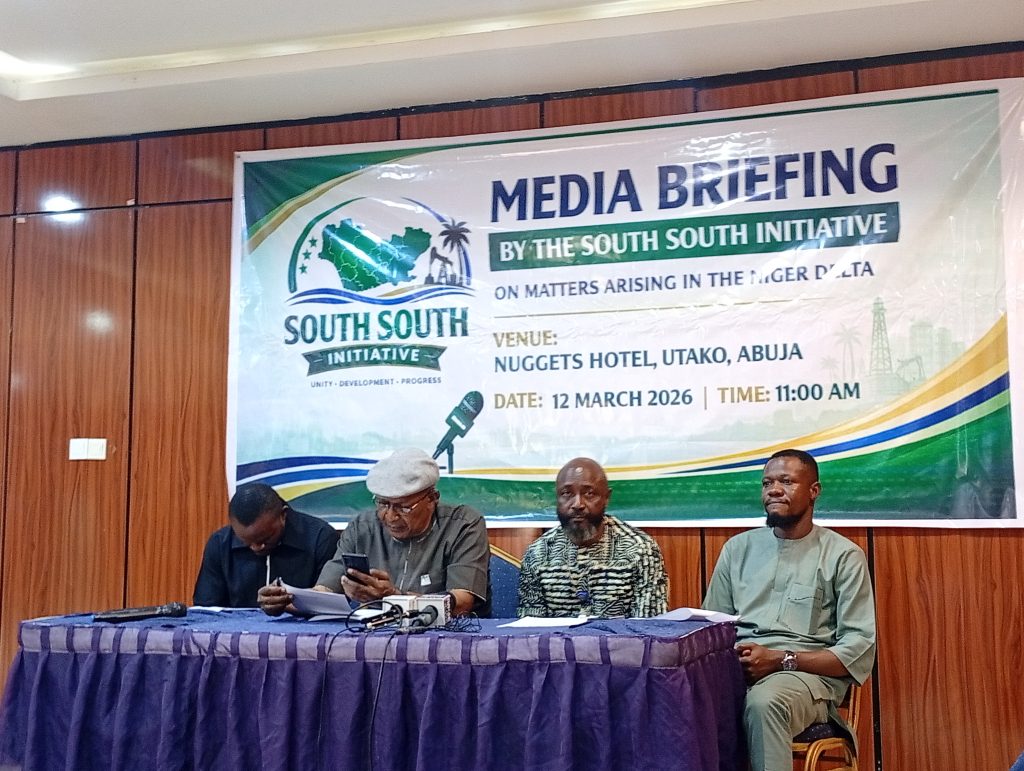
Speaking at a press briefing in Abuja on Thursday, President of the Initiative, Emmanuel Iriogbe, said the engagement of indigenous security companies has significantly improved monitoring and protection of pipelines in the Niger Delta.
According to him, the initiative has helped curb illegal bunkering, pipeline vandalism and organised crude oil theft that had plagued the region for decades.
“Nigeria’s crude oil infrastructure remains the lifeline of the national economy and must be protected through strategies that incorporate the participation of host communities who understand the terrain,” Iriogbe said.
The group explained that successive governments had struggled to address oil theft and pipeline attacks until the adoption of a community-driven surveillance approach that complements conventional security agencies.
It identified Tantita Security Services and Maton Engineering Services among the indigenous companies currently engaged to monitor pipelines and other critical oil facilities across the Niger Delta.
According to the Initiative, the arrangement has produced measurable results.
“Before the introduction of these indigenous surveillance structures, pipelines were under relentless attack. Illegal refineries operated openly and crude oil was siphoned in massive quantities,” the group said.
“Today, pipeline vandalism has reduced drastically, illegal bunkering has been significantly curtailed and the Federal Government can now make projections and budgetary plans based on more reliable production data.”
The Initiative also highlighted what it described as the inclusive structure of the surveillance framework.
It recalled that when the pipeline surveillance contract was awarded, the leadership of Tantita Security Services convened a stakeholders’ meeting in Oporoza, headquarters of the Gbaramatu Kingdom in Delta State, bringing together community leaders from across the Niger Delta, from Ondo State to Cross River State.
According to the group, participants at the meeting agreed that pipeline protection should not be monopolised by a single ethnic group but distributed among host communities through coordinators and subcontractors.
“This inclusive approach ensured that every community became a stakeholder in protecting national assets while also creating legitimate employment opportunities for youths across the Niger Delta,” the group stated.
However, the Initiative expressed concern over what it described as a deliberate campaign of misinformation aimed at discrediting the surveillance framework.
“Corruption in the oil bunkering sector is fighting back,” the group said.
“Those who profited from the chaos of pipeline vandalism and illegal refineries are naturally uncomfortable with the new order.”
The group cautioned the public against what it described as attempts by some actors allegedly linked to illegal refining networks to discredit the contractors currently safeguarding the pipelines.
It also urged President Bola Ahmed Tinubu to remain steadfast in sustaining the current surveillance framework, warning that dismantling it without a carefully designed alternative could destabilise the region.
“As history has shown, there was a time when the Niger Delta was engulfed in violence. Militancy disrupted oil production, pipelines were destroyed and national revenues collapsed,” the group added.
“The present stability was achieved through dialogue, inclusion and community participation.”
The Initiative suggested that the Federal Government could constitute an independent delegation to verify claims about the effectiveness and inclusiveness of the surveillance structure.
It also clarified that several contractors operate along different pipeline corridors in the Niger Delta, insisting that the arrangement should not be misrepresented as a monopoly.
According to the group, the collaborative model involving indigenous companies such as Tantita Security Services has proven more effective than previous approaches in safeguarding Nigeria’s oil infrastructure.




 English